




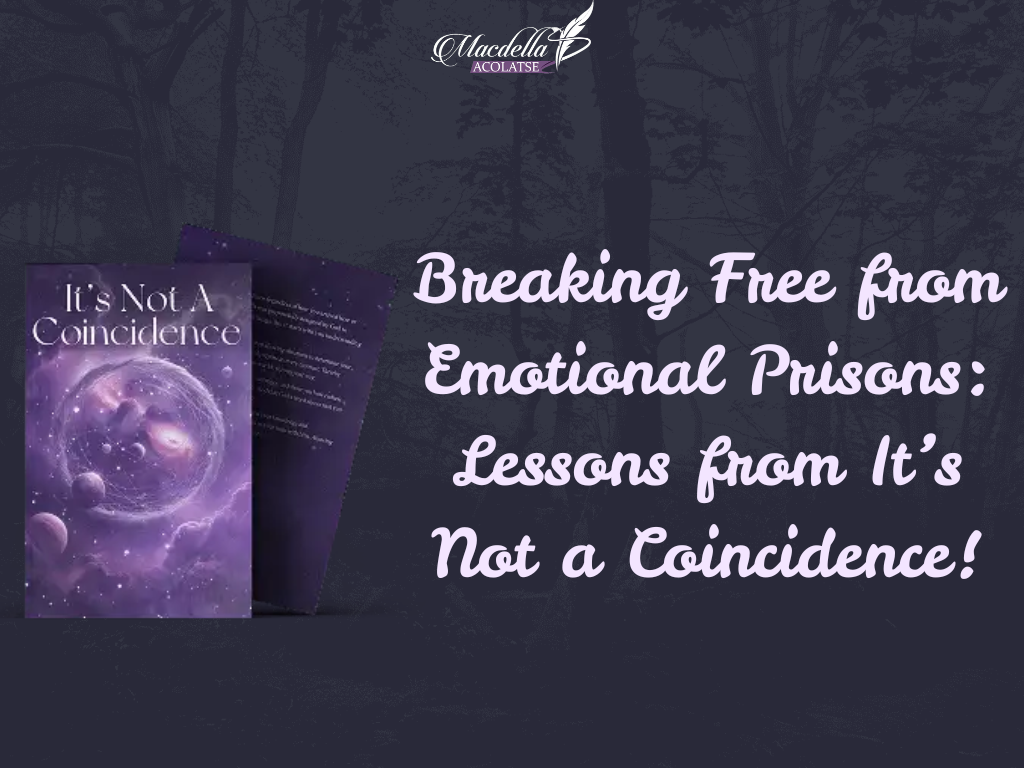
The most difficult moments of life make us think that we are stuck within the walls of some invisible wallpaper, a wallpaper made of saddening, humiliating, disappointed, betraying, or frightening walls. Macdella Acolatse throws open the door to her own emotional prisons in her book and takes the readers through the intense process of escaping. Her narrative is crude, exposed, and excruciatingly authentic, although it has a vein of hope that is becoming ever stronger as the chapters progress. In her adventurous book , the readers get to know that the emotional prisons might be powerful, however the purpose of God is more powerful.
Amazon: IT’S NOT A COINCIDENCE!: Your Life’s Challenges Do Not Alter God’s Plans!
Emotional prisons do not come out of the blue, which is one of the greatest lessons the book teaches. Macdella demonstrates that grief can suck the life out of your happiness, depression can destroy your vision, and suffering can disable your spirit. In the lowest point, she talks about how she could find a way of sleeping because her mind would not accept reality and she started thinking that she was a cursed person.
Shame is another significant emotional prison that is presented in the book. Macdella creates a clear vision of the sensation of shame: to be naked and in the center of a broad area where all eyes are on her, she is being judged and hurting. As her life went downwards into money loss, social embarrassment, and a state of homelessness, shame made her believe that she was isolated and alone. Worse it also perverted her faith in the love of God.
However, maybe the worst emotional jail of the book is bitterness. Bitterness is not blatant initially, a result of a sense of having been wronged, cheated, and exploited. It manifested in the life of Macdella when the people she believed in betrayed her, when the ones she had served to her laughed at her suffering, and when she knew that many of the ones who listened to her only did so, to gossip. Bitterness, she says, does not just cause you to feel that you are resenting people, it starts to distort you. It robs of you any tenderness, fogs your judgment, and turns to rot.
The other emotion prison that is covered in the book is the tendency to blame others. Blame is also reassuring since it takes responsibility off our hands particularly when we really have been wronged. But Macdella demonstrates that putting the blame on others is ceding power. It puts us in the mentality of thinking that the solution lies with the activities of another person. Rather, she describes how realizing her own role in some of those circumstances, including that she does not follow her boundaries, is overly pleasing and too much or even veers off her relationship with God, opened the door to making changes.
Another mental trap that is highlighted in the book is vengeance. In the case of betrayal, Macdella had the burning urge to make a point, to demonstrate to others the extent of her suffering or to even take vengeance on those who were teasing her over her suffering. But vengeance made her no better than she was made before. Rather than having punished those who had hurt her, it had incarcerated her even more.
The focal point of the freedom quest is a repeated theme throughout the book; the mind is the battlefield. The existence of emotional prisons exists in the mind even before the actual manifestation in actions or behavior. Macdella reveals the way the traumas of the past influenced her mentality, the reason why fear dictated her actions, and the way she subconsciously lived by the standards of her abusers. Being aware of this state of mental incarceration was the moment. She describes the mind as the main weapon of Satan which he employs to cast doubt, nourish fear and exaggerate pain. However, with the renewal of the mind, there is a break of the emotional chains.
Prayer as explained in the book is what opens the doors of the prison. Macdella kept on praying, and she did so even when she felt like she was forsaken by God, and she did it sometimes with anger, sometimes even with tears, and always sincerely. She started to have a different perception of her situation through prayer and intensive reading of the Word of God. God did not reject but preparedness was silent.